
Bach Inventions: A Comprehensive Guide to BWV 772-786
Bach invention PDFs are readily available online, offering access to scores like BWV 772. Numerous websites provide free and paid options, including Urtext editions.
Resources feature sheet music for solo piano or harpsichord, covering the complete set of fifteen two-part inventions (BWV 772-786).
What are the Bach Inventions?
Johann Sebastian Bach’s Fifteen Two-Part Inventions, cataloged as BWV 772-786, are a collection of short keyboard pieces designed as pedagogical tools and musical studies. These aren’t simply “exercises,” however; they represent a significant contribution to the Baroque repertoire, showcasing Bach’s mastery of counterpoint and harmonic ingenuity.
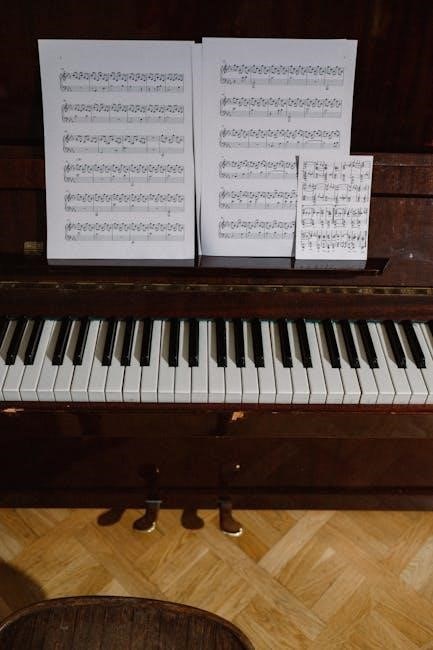
Each invention features two melodic lines interwoven in a contrapuntal texture. While often performed on the piano today, they were originally conceived for either the harpsichord or the organ. The availability of Bach invention PDFs has dramatically increased access to these works for musicians of all levels.
These pieces are distinct from Bach’s more complex fugues. Inventions generally have a simpler structure, focusing on the development of a single musical idea through imitation and variation. Finding PDF sheet music allows for convenient study and performance. The pieces range in character from lively and energetic to more introspective and lyrical, offering a diverse musical experience. The widespread availability of digital scores, including BWV 772, has fueled renewed interest in these foundational works.
Historical Context of the Inventions
Composed around 1720, during Bach’s tenure as Kapellmeister in Köthen, the Inventions arose from a period of significant keyboard music development. Prior to this, composers often focused on elaborate ornamentation and improvisation. Bach, however, sought to establish a more systematic approach to technique and compositional skill.
The Inventions were intended as instructional pieces, bridging the gap between simpler exercises and the more demanding fugues found in The Well-Tempered Clavier. The title “Invention” itself suggests a process of discovery and exploration, both for the composer and the performer. The increasing availability of Bach invention PDFs reflects a modern desire to engage with this historical pedagogical approach.
Interestingly, Bach later revised the collection and re-titled it the Sinfonias, suggesting a more sophisticated musical character than the initial “invention” concept implied. Access to digital scores, like those for BWV 772, allows modern musicians to explore these nuances. The ease of obtaining PDF sheet music has democratized access to Bach’s compositional genius, fostering a wider appreciation for his contributions.
BWV 772-786: Numbering and Organization
Johann Sebastian Bach’s fifteen two-part inventions are cataloged under the BWV (Bach-Werke-Verzeichnis) numbers 772 through 786. This systematic numbering, established by Wolfgang Schmieder, provides a standardized reference for scholars and musicians alike. The order isn’t strictly chronological, but generally progresses from simpler to more complex compositional techniques.
The collection begins with Invention No. 1 in C Major (BWV 772), a frequently studied piece often used as an introductory work. As one progresses through the numbers, the keys become more varied, and the contrapuntal textures more intricate. Finding Bach invention PDFs often presents the scores in this numerical order, facilitating a structured learning experience.
Many online resources offer complete sets of PDF scores, allowing performers to explore the entire collection. The availability of digital sheet music, including individual inventions like BWV 775 and BWV 784, makes it easier than ever to study and perform these masterpieces. The consistent numbering system aids in navigation and comparison across the entire set.
The Pedagogical Purpose of the Inventions
Bach conceived the Inventions, BWV 772-786, not merely as artistic statements, but as didactic tools for keyboard students. They were designed to develop specific technical and musical skills, bridging the gap between simpler exercises and more complex fugues. The systematic exploration of two-part counterpoint fosters independence of fingers and a keen understanding of harmonic relationships.
Accessing Bach invention PDFs allows students to readily practice these foundational exercises. The clear notation and relatively concise forms make them ideal for analytical study. The inventions address challenges like evenness of touch, articulation, and voicing – crucial elements of keyboard technique.
The availability of digital scores, including free PDF versions, democratizes access to this valuable pedagogical material. Students can annotate scores, experiment with different interpretations, and track their progress. Whether studying BWV 772 or BWV 784, the Inventions remain a cornerstone of keyboard education, offering a pathway to musical mastery.
Musical Characteristics: Two-Part Counterpoint
The defining characteristic of Bach’s Inventions (BWV 772-786) is their masterful two-part counterpoint. Unlike homophonic textures where a melody is supported by chords, these pieces feature two independent melodic lines interwoven with harmonic precision. Each voice maintains its individuality while contributing to the overall harmonic structure.
Studying Bach invention PDFs reveals how Bach expertly employs imitation, where a melodic idea is presented in one voice and then echoed in the other. This creates a sense of dialogue and interplay. The consistent use of invertible counterpoint – where the melodic roles of the two voices can be reversed – adds further complexity.
Access to digital scores, like those found as PDF downloads, allows for detailed analysis of these contrapuntal techniques. Examining pieces like BWV 772 or BWV 775 highlights Bach’s skill in creating musical interest through rhythmic variation and harmonic movement within a limited textural framework. The clarity of the PDF format aids in tracing these contrapuntal lines.
Key Signatures and Range of Keys
Bach’s Inventions (BWV 772-786) demonstrate a remarkable exploration of keys, systematically progressing through both major and minor tonalities. The collection encompasses a wide range, beginning with C major (BWV 772) and traversing through keys like D minor (BWV 775) and A minor (BWV 784), ultimately showcasing a comprehensive tonal landscape.
Accessing Bach invention PDFs allows musicians to easily identify the key signature of each piece and understand its implications for fingering and interpretation. The systematic progression is pedagogically valuable, exposing students to different key signatures and their associated challenges.
Digital scores, readily available as PDF downloads, visually represent these key signatures, aiding in quick comprehension. The range extends from relatively simple keys like C major to more complex ones, providing a gradual increase in difficulty. Analyzing BWV 772-786 through PDF scores reveals Bach’s deliberate choice of keys to highlight specific contrapuntal and harmonic possibilities.
Invention No. 1 in C Major (BWV 772): Detailed Analysis
Invention No. 1 in C Major (BWV 772) serves as an excellent entry point into Bach’s world of two-part counterpoint. Easily accessible as a Bach invention PDF, the score reveals a deceptively simple structure built upon a single, elegant subject. The invention’s charm lies in its continuous development of this subject through imitation, inversion, and stretto.
A close examination of the PDF score highlights the interplay between the two voices, demonstrating Bach’s mastery of weaving melodic lines together. The piece remains firmly rooted in C major, providing a clear harmonic foundation. Downloading a BWV 772 PDF allows for detailed study of the fingering and articulation markings, crucial for achieving a clean and expressive performance.
The availability of digital scores facilitates analysis, enabling musicians to trace the subject’s transformations and appreciate the ingenuity of Bach’s compositional technique. This invention, often the first encountered, provides a solid foundation for tackling the more complex pieces within the set.
Invention No. 4 in D Minor (BWV 775): A Popular Choice
Invention No. 4 in D Minor (BWV 775) consistently ranks among the most beloved of Bach’s two-part inventions, and finding a Bach invention PDF of this piece is remarkably easy. Its appeal stems from its dramatic character and expressive melodic lines, a contrast to the brighter tonalities of some other inventions.
The PDF score reveals a more complex texture than Invention No. 1, with a subject that lends itself to varied treatments. Students often gravitate towards BWV 775 due to its inherent musicality and the opportunities it provides for developing expressive phrasing. Accessing a digital copy allows for focused practice and detailed analysis of the contrapuntal writing.

Numerous online resources offer BWV 775 PDF downloads, catering to both beginner and intermediate pianists. The availability of both free and paid versions ensures accessibility for all. Studying the score closely reveals Bach’s skillful use of dynamics and articulation to create a compelling musical narrative.
Invention No. 13 in A Minor (BWV 784): Exploring Minor Keys
Invention No. 13 in A Minor (BWV 784) presents a fascinating exploration of the expressive potential within minor keys, and locating a reliable Bach invention PDF of this work is straightforward. Compared to the often-sunny disposition of major-key inventions, BWV 784 offers a more introspective and melancholic character.
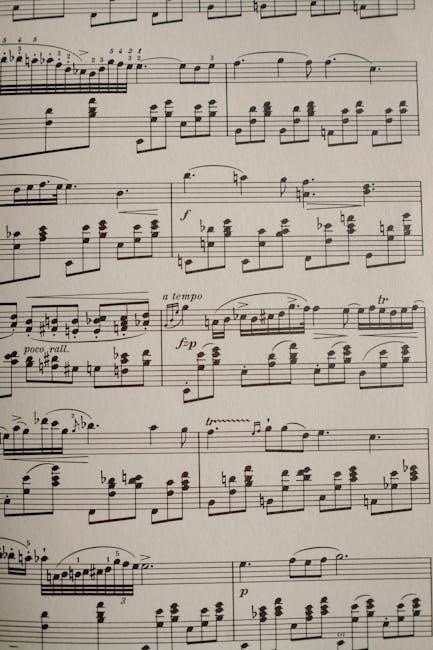
A PDF score of this invention highlights Bach’s mastery of counterpoint in a minor tonality. The subject is characterized by its lyrical quality and subtle harmonic shifts, demanding careful attention to voicing and phrasing. Many pianists find this piece particularly rewarding to learn, as it encourages a deeper connection with the emotional content of the music.
Online repositories provide numerous BWV 784 PDF options, ranging from free downloads to professionally prepared editions. Accessing a digital version facilitates detailed study and allows for convenient practice. The invention’s structure, clearly visible in the PDF, showcases Bach’s ingenious compositional technique and provides valuable insights into Baroque counterpoint.
Finding Bach Invention PDFs Online
Locating Bach invention PDFs is remarkably easy in today’s digital landscape. A wealth of resources exists online, offering access to scores of BWV 772-786. Several websites specialize in providing sheet music, with many offering both free and paid PDF downloads. A simple web search for “Bach Inventions PDF” yields numerous results, including options for individual inventions or complete collections.
However, navigating these resources requires discernment. While free PDFs are readily available, their quality can vary significantly. Paid options often provide more accurate and carefully edited scores. Websites like Sheetmusic2print.com and others offer Urtext editions, representing the composer’s original intentions.
Furthermore, platforms dedicated to classical music sheet music frequently feature Bach invention PDFs. These sites often allow users to preview scores before purchasing, ensuring the edition meets their needs. Remember to check licensing terms before downloading or printing any PDF, respecting copyright regulations.
Reputable Sources for PDF Sheet Music
When seeking Bach invention PDFs, prioritizing reputable sources ensures accuracy and quality. Urtext editions are highly recommended, representing the composer’s original notation. Websites like Sheetmusic2print.com consistently appear as reliable providers, offering downloadable PDFs of individual inventions and complete sets (BWV 772-786).

IMSLP (International Music Score Library Project) is another invaluable resource, though it primarily offers scans of public domain scores. While free, these may require some editing or correction. Musicnotes.com and similar platforms provide legally licensed PDFs, often with interactive features and adjustable playback speeds.
Consider Henle Verlag, renowned for its scholarly Urtext editions. Though typically available in physical book format, digital PDF versions are increasingly common. Always verify the publisher’s reputation and the edition’s pedigree before purchasing. Checking user reviews can also provide valuable insights into the score’s accuracy and usability when searching for Bach invention PDFs.
Free vs. Paid PDF Sheet Music Options
The availability of Bach invention PDFs spans a spectrum from free to paid resources. Free options, like those found on IMSLP, offer convenient access but often present scanned scores that may contain inaccuracies or require editing. These are generally public domain editions.
Paid PDFs, available from sites like Sheetmusic2print.com and Musicnotes.com, typically provide higher-quality, digitally-engraved scores. These often include features like adjustable playback speed and zoom functionality. Urtext editions, prioritizing accuracy to the composer’s original intent, are frequently available for purchase.

The choice depends on your needs and budget. For casual study or initial exploration, free PDFs can suffice. However, for serious practice, performance, or scholarly work, investing in a reliable, professionally-prepared PDF is highly recommended. Consider the long-term value of a clean, accurate score when evaluating Bach invention PDFs.
Urtext Editions and Their Importance
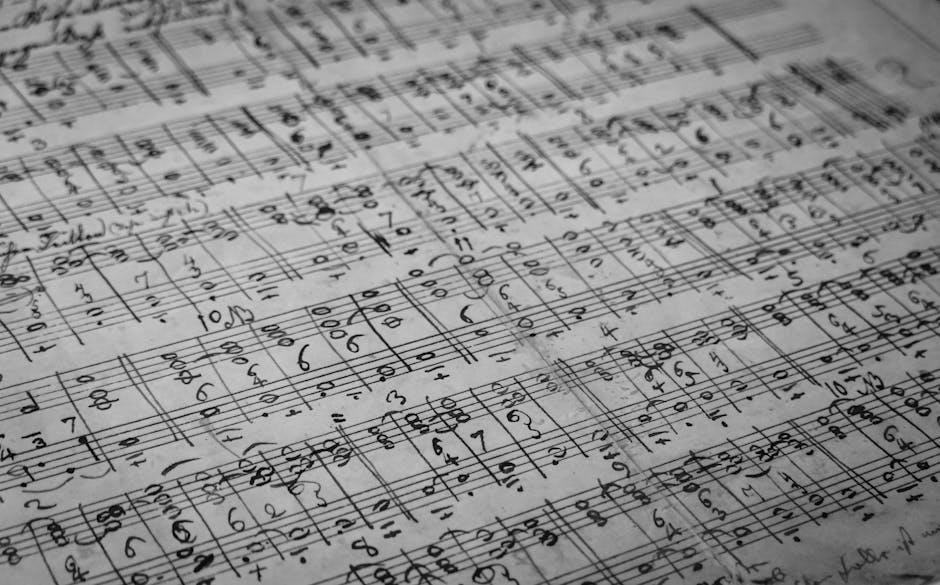
Urtext editions of Bach invention PDFs represent the highest standard in scholarly music publishing. These editions aim to present the composer’s original intentions with minimal editorial intervention, offering a direct link to Bach’s compositional voice. They prioritize accuracy above all else, meticulously comparing multiple original sources.
Unlike editions that may include added dynamics, fingerings, or interpretations, Urtext scores present the notes as Bach wrote them. This is particularly crucial for studying counterpoint and understanding the inherent structure of the inventions. When seeking Bach invention PDFs, identifying an Urtext edition ensures you’re working with a reliable foundation.
While potentially more expensive, the investment in an Urtext score is invaluable for serious students and performers. They encourage independent musical decision-making and a deeper engagement with Bach’s music. Resources like Sheetmusic2print.com specifically highlight Urtext availability for pieces like BWV 772.
Sheet Music Formats: PDF, MIDI, and More
When searching for Bach invention PDFs, you’ll encounter various file formats catering to different needs. The PDF format is the most common, offering a visually accurate representation of the printed score, ideal for printing and reading on screens; It preserves layout and notation faithfully.
MIDI files, however, provide a different experience. They contain instructions for playing the music and allow you to hear the inventions performed by a computer. While useful for familiarization, MIDI lacks the nuance of a human performance and doesn’t display the score visually.
Less frequently, you might find other formats. Some websites offer interactive scores or versions compatible with specific music notation software. The availability of these formats varies depending on the source. For studying and performance, the PDF remains the preferred choice for accessing Bach invention sheet music, offering both visual clarity and portability.
Playing the Inventions: Technical Challenges
Embarking on Bach’s Inventions, even with a readily available Bach invention PDF, presents unique technical hurdles for pianists. The two-part counterpoint demands independent hand coordination – each hand often plays a complete melodic line simultaneously. This requires significant dexterity and the ability to maintain clarity in both voices;
Fingerings are crucial. Efficient fingerings, often not explicitly marked in all PDF versions, are essential for navigating the rapid passages and maintaining legato phrasing. Students must develop a keen ear to balance the voices, ensuring neither line overshadows the other.
Furthermore, the Inventions aren’t merely exercises in technique; they require musicality. Achieving a convincing interpretation involves shaping phrases, controlling dynamics, and understanding the harmonic structure. Simply playing the correct notes from a PDF isn’t enough; bringing the music to life demands dedicated practice and musical sensitivity.
Interpreting Bach’s Inventions: Stylistic Considerations
Successfully interpreting Bach’s Inventions, even with a detailed Bach invention PDF in hand, necessitates understanding Baroque performance practice. Avoid excessive Romantic-era tendencies like heavy pedaling or overly dramatic rubato. Clarity and articulation are paramount.
Consider the dance-like character inherent in many Inventions. While not explicitly dance suites, their rhythmic vitality suggests a subtle pulse. Ornamentation, though not extensively written in the PDF scores, was common in Bach’s time; tasteful additions can enhance the musicality.
Strive for a balanced texture, ensuring both melodic lines are equally prominent. Avoid a “melody and accompaniment” approach. The goal is to reveal the intricate interplay between the voices. Studying recordings by historically informed performers can provide valuable insights into appropriate stylistic choices. Remember, the PDF is a guide, not a rigid prescription.

The Inventions and the Well-Tempered Clavier
Bach’s Inventions and The Well-Tempered Clavier are often considered companion pieces, representing distinct yet complementary facets of his pedagogical and compositional genius. While the Well-Tempered Clavier explores the possibilities of equal temperament through preludes and fugues, the Inventions focus on developing two-part counterpoint.
Both collections served as instructional tools. A Bach invention PDF, alongside a Well-Tempered Clavier score, provides students with a progressive path to mastering keyboard technique and harmonic understanding. The Inventions prepare the student for the more complex structures found in the fugues.
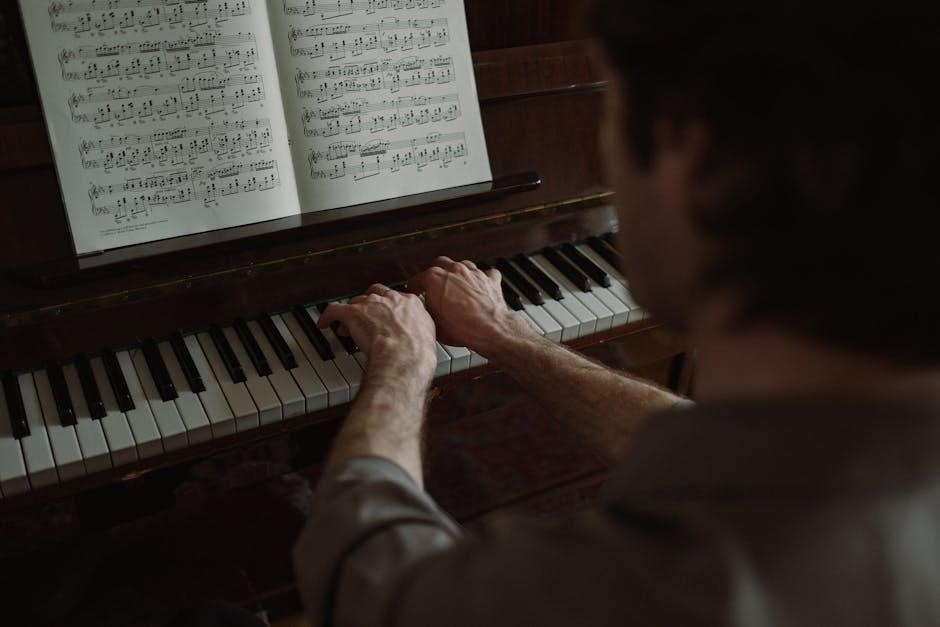
Interestingly, Bach himself initially titled the Inventions “Two-Part Fugues,” highlighting their connection to fugal writing. Though he later revised the title, the underlying contrapuntal principles remain. Studying both collections, utilizing resources like readily available PDF sheet music, reveals a unified artistic vision.
Modern Performances and Recordings
Today, Bach’s Inventions remain cornerstones of the piano repertoire, frequently featured in recitals and examinations. Numerous modern performances and recordings showcase diverse interpretations, ranging from historically informed performances on the harpsichord to contemporary piano interpretations.
Access to high-quality Bach invention PDF scores facilitates study and performance. Musicians utilize these digital resources alongside recordings to analyze phrasing, articulation, and overall musicality. Online platforms host performances by renowned pianists, offering valuable insights.
The availability of PDF sheet music has democratized access to these works, allowing amateur and professional musicians alike to engage with Bach’s music. Modern recordings often prioritize clarity and balance, highlighting the intricate interplay between the two voices. Exploring various interpretations, guided by accessible scores, enriches the listening and learning experience.
Software for Viewing and Editing Bach Invention PDFs
Working with Bach invention PDFs often requires specialized software beyond standard PDF readers. Programs like Adobe Acrobat Pro allow for annotation, marking, and even basic editing of scores. For musicians, dedicated sheet music viewers such as MuseScore and ForScore offer enhanced features.
These applications facilitate transposition, tempo adjustments, and the addition of fingerings directly onto the PDF. Some software integrates with MIDI playback, enabling musicians to hear the score as they follow along. Digital annotation tools are invaluable for practice and analysis.
Furthermore, Optical Music Recognition (OMR) software can convert PDF images of sheet music into editable scores, though accuracy can vary. Utilizing these tools streamlines the learning process and allows for personalized study of Bach’s intricate compositions. The accessibility of PDFs combined with powerful software empowers musicians to deeply engage with the music.
Beyond the Piano: Arrangements for Other Instruments
While originally conceived for keyboard, the Bach Inventions (BWV 772-786) have inspired countless arrangements for diverse instruments. Many of these arrangements are available as PDFs, expanding the repertoire beyond the piano and harpsichord.
String ensembles frequently perform adapted versions, with each voice assigned to a different instrument. Flute, violin, and cello arrangements are particularly popular, showcasing the contrapuntal lines in new timbral colors. PDF sheet music tailored for these instruments often includes specific fingerings and bowing indications.
The accessibility of Bach invention PDFs has fueled creativity, leading to transcriptions for guitar, recorder, and even wind quintets. These adaptations demonstrate the universality of Bach’s musical language. Exploring these arrangements offers fresh perspectives on the Inventions, revealing their inherent beauty and adaptability. Musicians can readily find and download these arrangements online, fostering a wider appreciation for Bach’s genius.